







What is CBN? Effects, Benefits, and More
What is CBN? Learn about the basics of this cannabinoid, what it does, how it can benefit you, and more with this guide from Sunmed.

Key Takeaways:
- CBN (cannabinol) is a naturally occurring, mildly psychoactive hemp compound that forms as THC ages and breaks down. It's best known as a nighttime wellness product.*
- Unlike melatonin or over-the-counter sleep aids, CBN interacts with your endocannabinoid system's CB2 receptors, which may support a more comfortable, restful night without next-day grogginess.*
- In Sunmed's clinical trial with Radicle Science, 86% of participants experienced improved sleep, 78% experienced reduced fatigue, and 76% experienced reduced feelings of anxiousness after 6 weeks of consistent use.*
It's easy to believe that 1 in 3 adults don't get enough sleep. Hustle culture has glorified long hours and constant busyness, leaving us burnt out, exhausted, and stuck in a relentless, sleep-deprived cycle.
The average person spends 26 years of their life asleep and about 7 extra years trying to get to sleep. Our time in restoration is not just a mental, physical, and functional need — it's a significant portion of our time here.
To get proper rest, we shouldn't have to rely on sleep aids like melatonin and sleeping pills that leave us groggy, or depend on caffeine to stay awake during the day. Our bodies and minds deserve a more sustainable option.
One of Sunmed's many wellness goals is to use plant compounds to meet the essential and increasingly important need to sleep better. This means utilizing natural supplements like CBN to fall asleep easily, sleep peacefully, and wake up truly restored.
So, what is CBN, exactly? A naturally occurring hemp compound, this cannabinoid has promising results for regulating sleep and enhancing overall well-being.* Here's what you need to know.
What is CBN?
Cannabinol (CBN) is one of many cannabinoids, like CBD or THC. CBN is a minor cannabinoid, which means that it occurs less frequently or in smaller amounts in the hemp plant.
CBN begins in the hemp plant as CBG, eventually degrading into THC. The hemp flower begins to break down even further through exposure to heat, air, and light, in a process called oxidation. Eventually, THC loses most of its psychoactive properties and gains interesting, sleep-inducing ones, converting into what we know as CBN. Basically, CBN is the byproduct of an aged hemp plant.
CBN and sleep
While this "sleepy" cannabinoid has certainly gained a powerful reputation as a nighttime supplement, there has been a surprising lack of peer-reviewed data supporting this customer experience (until our recent clinical trial with Radicle Science). What we do know is that hemp-derived cannabinoids have a powerful influence over the endocannabinoid system, which impacts how well we feel every day.
There are several ways in which CBN may work to play a supportive role in the sleep process, but the experience will likely differ from person to person. There could be cases where CBN indirectly supports better sleep; it may also be the combination of CBN and CBD working together to provide sleep-supporting benefits.*
How does CBN differ from CBD and THC?
Every cannabinoid is capable of interacting with your body's endocannabinoid system in a unique way, which means different cannabinoids can be responsible for producing different effects.*
Your endocannabinoid system contains receptors all throughout your body, embedded within many important organ systems and processes. Cannabinoids primarily interact with cannabinoid-specific receptors called CB1 receptors and CB2 receptors, but they may also be capable of interacting with similar non-cannabinoid-specific receptors throughout the body.*
CBD and the endocannabinoid system
When a cannabinoid interacts with these receptors, it can do so in one of three ways. The first is to stimulate a receptor without binding to it or changing how it works. The interaction provided by non-binding cannabinoids encourages receptors within your endocannabinoid system to perform their natural functions — which is how cannabidiol (CBD) works to provide support for your mind and body.*
THC and the endocannabinoid system
The second and third methods of interaction are by binding with the receptor. Cannabinoids have something called a binding affinity — and some cannabinoids only have a binding affinity for one type of receptor, which limits or focuses their potential effects. Other cannabinoids have a binding affinity for both types of receptors, which increases the scope of their effects.*
Delta-9 tetrahydrocannabinol (THC) has a binding affinity for both types of receptors, but its binding affinity for CB1 receptors is much higher. When THC binds to CB1 receptors, it alters the receptor's ability to send and receive messages via neurotransmitters. The disruption in delivery caused by THC leads to psychoactive, sometimes intoxicating effects.*
CBN and the endocannabinoid system
Cannabinol (CBN) can also loosely bind to both types of cannabinoid receptors, but it has a higher binding affinity for CB2 receptors.
CB2 receptors play a role in the body's ability to manage feelings of tension and discomfort. This could be a potential mechanism for why some people experience sleep-enhancing effects from CBN. You sleep much better when you're comfortable — and if your body is tense, you're likely to have a difficult time falling asleep and staying asleep.*
Some studies combine CBN with CBD and show promising results when the two cannabinoids are used together. CBN could be acting independently alongside CBD, or the two cannabinoids may have synergistic benefits, enhancing each other's effects. Many cannabinoids may be able to work in unison to enhance or modulate each other's effects, which is the basis for a popular theory called the entourage effect. The entourage effect makes the case for synergy between all compounds in the hemp plant, and it might be at play when you use full spectrum hemp products.
CBN is technically considered a mildly psychoactive cannabinoid due to its binding affinity — but most people who use CBN don't report experiencing any psychoactive effects at modest serving sizes.** While some people find that it makes them feel sleepy, others may feel less feelings of tension, reduced feelings of anxiousness, or a greater sense of peace and well-being.*
How does CBN work?
While we know about CBN's sleepy-time effects, there are a few theories about how it actually works in the body to produce its soothing benefits.
The sleep receptor theory
The National Institutes of Health suggests that endocannabinoid system receptors in the forebrain and brainstem are involved in sleep induction, sleep modulation, and sleep cycle regulation. The theory is that when we take CBN, it binds to these receptors, signaling your internal processes that it is time to go to sleep. Users often note an easier time falling asleep, staying asleep, and waking up with less grogginess.*
The terpene theory
Another theory is that when hemp degrades (or gets older), so does its terpenes. When THC converts into CBN, terpenes convert into terpenoids, like linalool (which is the key calming agent in calming herbs like lavender and valerian root). The idea is that terpenes may be the reason for CBN's sleepy reputation.*
The answer to how CBN works is most likely a combination of these two ideas. But this knowledge just wasn't enough — there were still too many questions involving CBN's potential.
That's why we partnered with Radicle Science to determine the most efficient formula of CBN for improving sleep. Our historic clinical trial uncovered some of the first rigorous human data on how different servings of CBN impact sleep.
What the research says
In a double-blind, placebo-controlled study of 660 participants, our proprietary Sleep CBN formula was shown to improve sleep quality in 86% of users, reduce fatigue in 78% of users, and ease feelings of anxiousness in 76% of users after 6 weeks of consistent use.* (Plus, you can subscribe today and get your first jar 20% off!)
What kinds of CBN products exist?
CBN is available in every form CBD comes in. People who use cannabinoids for their wellness often prefer to use edibles like gummies or CBD oil tinctures. There are also cannabinoid vape products, but not much is known about the potential long-term effects of vapor products.
Gummies
CBN gummies are an excellent choice for people who already use gummy supplements. If you take supplements throughout the day and keep them separated in an organizer, it's easy to pop a CBN gummy into your nighttime compartment.
Some people find that CBN gummies are easier to measure appropriately. Tinctures require measurement — if you want to use a specific serving of CBN, you have to calculate the amount in milliliters. Each gummy has a specific amount of total cannabinoids, making it that much easier for you to get your daily wellness support.
They're also easier to travel with, and if you sleep away from home at least some of the time, you may feel better about traveling with a tub or pouch of gummies than you do about traveling with a small glass bottle.
CBN gummies may take a little longer to work than other CBN delivery methods. The body needs to digest the gummy and metabolize the CBN before it's able to reach your endocannabinoid system, and this process usually takes between 45 minutes and an hour for most people. Make sure to time your serving right so that your CBN will have enough time to reach your endocannabinoid system before bed.*
Tinctures
Tinctures are a tried and true way to use cannabinoids. You release the CBN drops under your tongue and hold them there for at least a minute. While you're holding the drops in place, the cannabinoids begin to absorb through the soft tissue under your tongue before swallowing. This gives CBN a head start in reaching the endocannabinoid system, allowing some of the CBN to bypass your digestive system and potentially get to work sooner.*
Tinctures usually begin to produce effects within 30 to 45 minutes. They'll already be working by the time your body finishes digesting the tincture that you swallowed.
Some people don't use tinctures because they don't like the taste; you have to hold a tincture in your mouth for at least a minute, and it's not exactly easy to do that if you find the taste off-putting. But we've improved the experience with our blueberry CBN tincture. No icky taste here.
We've enhanced our nighttime tincture with soothing linalool terpenes from lavender, which may help naturally induce relaxation. We've also included valerian root, a natural sleep supporter that may help prepare the mind and body for sweet dreams.*
Does CBN have side effects?
Anything that impacts important systems within your body is capable of producing side effects. Side effects for cannabinoids like CBN are uncommon and usually mild if they occur. Any side effects may be more noticeable when you use higher concentrations of CBN.*
The potential side effects of CBN are usually much more mild than the side effects people may experience when they use over-the-counter sleep aids, or hormone supplements like melatonin.* Some people experience drowsiness when they use CBN, but that may be the entire point.
But unlike melatonin hormone supplements and over-the-counter sleep aids that leave consumers feeling completely sedated, many users also note that this is not the case with CBN. And according to our clinical trial results, 78% of users noticed less morning fatigue and unwanted grogginess once incorporating a CBN supplement.*
The bottom line
CBN is a fascinating cannabinoid with major potential for natural sleep support. It could be the difference between a snoozed alarm and a natural, refreshed awakening — a feeling you deserve to experience every single day.
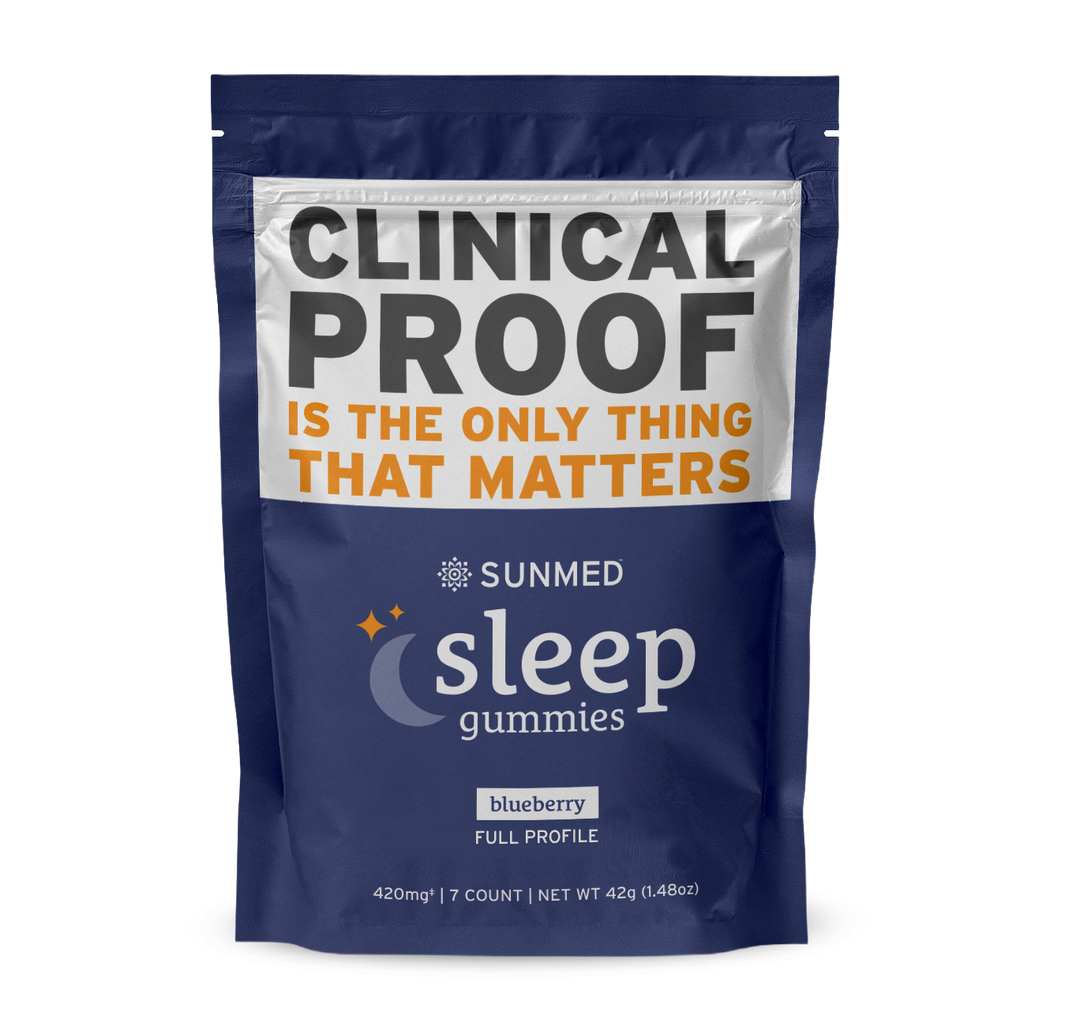
Although it isn't exactly clear how CBN promotes better sleep, researchers have some theories as to why it works. Using CBN products that also contain CBD may also be more effective than using CBN products that don't contain CBD, just like our clinically proven Sleep CBN Gummies.*
Cannabinoids can be used to support your mood, focus, and full-body relief throughout your everyday routine. Shop our full collection of cannabinoid wellness products here.
FAQs
What does CBN stand for?
CBN stands for cannabinol, a minor cannabinoid found in the hemp plant. It forms naturally as THC ages and breaks down through a process called oxidation.
Is CBN psychoactive?
CBN is considered mildly psychoactive because of its binding affinity for cannabinoid receptors, though most people don't notice any intoxicating effects at modest serving sizes.*
What's the difference between CBN, CBD, and THC?
CBN, CBD, and THC are all cannabinoids, but each interacts with your endocannabinoid system differently. CBD works without binding tightly to receptors, THC binds strongly to CB1 receptors, and CBN has a higher affinity for CB2 receptors. This may be why CBN is associated with feelings of calm and better sleep.*
What is CBN used for?
CBN is most commonly used as a nighttime wellness supplement. Many people take it in gummy or tincture form to support relaxation and a more restful night's sleep.*
How long does it take for CBN to work?
Tinctures typically start working within 30 to 45 minutes, while gummies usually take 45 minutes to an hour since they need to be digested first.
Is CBN legal?
Hemp-derived CBN products that contain no more than 0.3% delta-9 THC are federally legal in the U.S. under the 2018 Farm Bill, though regulations can vary by state — it's worth checking your local laws before purchasing.
*This statement has not been evaluated by the Food & Drug Administration. This product is not intended to diagnose, treat, cure, or prevent any disease.
Sources:
Prevalence of Healthy Sleep Duration among Adults — United States, 2014 | MMWR | CDC
Our Life in Numbers: How Long We Sleep, Work & More | Dreams
100+ Sleep Statistics - Facts and Data About Sleep 2023 | Sleep Foundation
The Curious Case of CBN & Sleep | Project CBD
Cannabinol - an overview | ScienceDirect Topics
Taming THC: potential cannabis synergy and phytocannabinoid-terpenoid entourage effects | NCBI