







CBG Benefits: 6 Things the Research Says It May Help With
Curious about CBG benefits? Let's break down six areas researchers are studying, what the studies found, and how strong the evidence really is so far.

Key Takeaways:
- Most CBG research is still early, and many findings come from cell and animal studies.
- In a small 2024 placebo-controlled trial, 20 mg of hemp-derived CBG was linked to lower feelings of tension and slightly better word recall.
- Researchers are also exploring CBG's potential role in skin comfort, physical discomfort, appetite, and digestive comfort.
CBG gets talked about like it can do a little bit of everything, but what do the studies actually show? Some findings are exciting, many are early, and all of them deserve a closer look.
CBG (cannabigerol) is a non-intoxicating cannabinoid found in the hemp plant. If you're new to it, our complete guide to CBG covers the basics. Here, we're focusing on the research: six areas scientists are exploring, what they found, and how much weight each finding can carry.
1. A healthy stress response
Stress is one of the biggest reasons people get curious about CBG. In a survey of 127 CBG users, about half said they used it for feelings of tension.
Researchers put that idea to the test in a 2024 double-blind, placebo-controlled trial with 34 healthy adults. Participants took a single 20 mg serving of hemp-derived CBG in one session and a placebo in another, then completed a timed speech and math challenge.
Compared with placebo, CBG was linked to greater overall reductions in self-reported feelings of tension and lower stress ratings about 20 minutes after taking it. Participants didn't report feeling intoxicated, and testing showed no signs of impairment.
Those results deserve some perspective. The difference was modest: a 0.95-point drop with CBG versus a 0.66-point drop with placebo on a 10-point scale. A second questionnaire and mood ratings showed no significant change.
2. Memory and brain health
One of the 2024 trial's most interesting results was one researchers didn't expect. Participants did better on a word-list memory test after taking CBG than after taking a placebo. The gap was small, about one extra word at its widest, and the authors said the finding needs to be repeated.
Lab research adds another layer. In a 2018 cell study, scientists gave CBG to mouse nerve cells, then exposed them to a harmful environment created by activated immune cells. CBG helped limit cell loss and lowered markers of oxidative stress, a process that can damage cells.
That's encouraging, but cells in a dish aren't the same as a human brain. The study's authors noted that their results still needed to be confirmed in living models. For now, this is a promising area to watch, not proof that CBG supports brain health in people.
3. Skin comfort and barrier support
Skin is one of the few areas where CBG has been tested directly on people. A 2022 study evaluated a 0.1% CBG serum in 20 participants. After their skin was intentionally irritated, the serum and a placebo were applied topically for two weeks.
The CBG serum outperformed placebo in two areas: it reduced the appearance of redness and reduced water loss through the skin, a common measure of barrier function. In lab testing on human skin cells, CBG and CBD also lowered reactive oxygen species, a marker of oxidative stress, better than vitamin C.
That's a promising start for a topical ingredient, but it comes with limits. The human study was small, and it tested one company's CBG ingredient, produced through yeast fermentation. Those results may not apply to other topicals or to CBG products you take by mouth.
4. Physical discomfort
Physical discomfort is another common reason people turn to CBG. In the same survey of 127 users, about 41% said they used CBG-dominant products for ongoing discomfort, and most of them reported improvement.
Surveys can't show cause and effect, though. Respondents reported their own results, there was no placebo group, and 29% said their products contained THC. The authors said they couldn't rule out other cannabinoids as the reason for the reported effects.
A 2023 pilot study offers a more controlled look. Forty exercise-trained people took a placebo or a formula containing 50 mg of CBG, 35 mg of CBD, beta-caryophyllene, amino acids, and magnesium twice a day for 3.5 days. The formula reduced how much post-exercise soreness interfered with daily activities. However, it had no significant effect on objective recovery measures, sleep quality, or mood. Because the formula combined several ingredients, the results can't be credited to CBG alone.
5. Appetite
Appetite research on CBG started in animals. In a 2016 study, scientists gave CBG to rats that had already been fed. At 120 to 240 mg per kilogram of body weight, the rats ate roughly twice as much food as they did after a placebo.
The difference came mostly from eating more often. The rats had more meals and, at the highest amount, started eating about 30 minutes sooner, but individual meals didn't get significantly larger. Those amounts were far higher than what's typically found in whole hemp plant preparations, as the authors pointed out.
Human data is limited and mixed. A 2026 study of 12 healthy adults found higher appetite ratings after a single 200 mg serving of CBG, but not at lower amounts.
6. Digestive comfort
Digestive research on CBG is at an even earlier stage. In a 2013 study, researchers tested CBG in mice with chemically induced gut irritation.
CBG improved several markers of gut irritation in the mice. In related lab tests, it also reduced oxidative stress in intestinal cells. Based on those findings, the authors suggested that CBG was worth studying in people.
That's the key takeaway here: this research gave scientists a reason to keep looking, but it doesn't show how CBG affects digestion in humans. A result in mice is a starting point, not a conclusion. For now, the strongest thing we can say is that digestive comfort is an interesting area for future studies.
What the research doesn't tell us about CBG yet
CBG science is moving quickly, but there are still important gaps. Most human studies are small and look at short-term use.
Study products also vary widely. A skin serum, a tincture, and a multi-ingredient recovery formula can't be compared directly, and a result from one may not apply to another. Long-term daily use also remains an open question.
Funding matters too. The 2024 trial and 2026 study were both funded by companies that work with cannabinoids, so independent studies would add confidence.
While we look forward to more independent studies on CBG, early research is promising in a number of areas, and we are excited to offer ways to incorporate this promising cannabinoid into your wellness routine.
The bottom line
Here at Sunmed, we are all about real science and honest conversations. That means getting excited about promising research while being upfront about what we still don't know. CBG has plenty of potential, but the science is still growing, and we think you deserve the full picture.
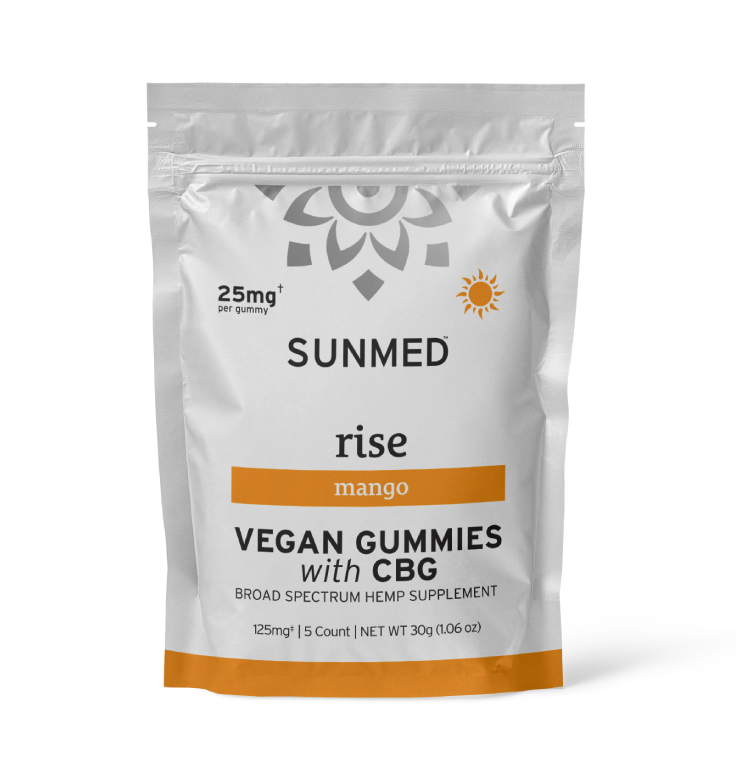
We're also all about making hemp simple. Every wellness journey is personal, so we offer third-party lab reports and friendly guidance to help you choose with confidence. Curious about CBG? Explore our Broad Spectrum Rise CBG Gummies, made with 50 mg of CBG per gummy.
FAQs
Has CBG been studied in people?
Yes, but mostly in small studies so far. The trials and surveys discussed here ranged from 12 to 127 people, so larger, longer studies are still needed.
How much CBG did researchers use?
The 2024 trial used a single 20 mg serving, while the 2026 study tested single servings from 25 mg to 200 mg. These amounts show what was studied, not a recommended serving size.
Does CBG have side effects?
The 2026 study reported no adverse events tied to CBG, but it only looked at single servings. In a survey, some users reported dry mouth, sleepiness, increased appetite, or dry eyes, though some products also contained THC.
Can I take CBG with medication?
Talk with your healthcare provider first. Potential interactions between CBG and some medications aren't yet known.
Sources:
In Vitro Model of Neuroinflammation: Efficacy of Cannabigerol, a Non-Psychoactive Cannabinoid | PMC
Cannabigerol is a novel, well-tolerated appetite stimulant in pre-satiated rats | Psychopharmacology
